
Request a demo
EN SOLUTIONS Hydro

Promising future for a company from Saint-Philippe: AI in dam management

Blog

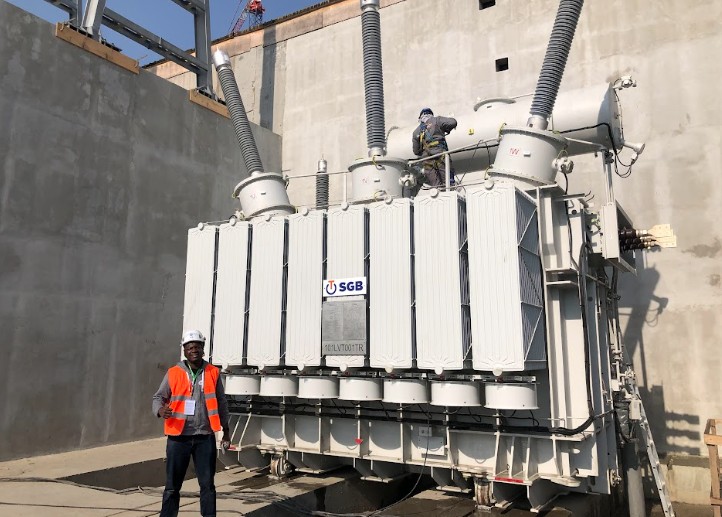
The company developed its expertise during trials carried out in Africa, among other places. (Photo courtesy)

A young company from the region is about to revolutionize the management of hydroelectric dams thanks to its software powered by artificial intelligence.

Holding a master’s degree in mechanical engineering applied to hydroelectric power from the École Polytechnique de Montréal, Emmanuel Ngue and his team have developed software that, through AI, allows hydroelectric plants to respond more quickly to outages, optimize their maintenance processes, and make teams more productive.

The result is an efficiency that has surprised many managers of hydroelectric facilities, starting with the first trials carried out in 2024 in Nigeria, and later at other installations across Africa and South America.

“With our system, as soon as an outage occurs, we can automatically identify its source,” explains the Saint-Philippe resident. “But we don’t wait for the failure to happen: our predictive models learn how each system operates and act upstream to prevent breakdowns.”

The company can also better prepare the maintenance processes required for each installation—a task that normally takes several days of preparation, but that AI can reduce to less than 10 minutes.

Needless to say, these improvements have a direct impact on power companies’ production costs, because they make operations faster, more productive, and better anticipated. That translates into greater asset availability, longer equipment life, and a more stable grid.

A shortage of new talent
It was through the experience he gained while working for industry giants such as Andritz Hydro and General Electric (GE) that the Saint-Philippe resident realized there was a need for a more responsive way to act when facilities go down.

“Many plant operators still rely on proven tools like SAP, Oracle, or even Excel. For organizations with budgets in the hundreds of thousands or millions of dollars, the approach often remains cautious: they prefer technologies they’ve always used rather than immediately adopting solutions that could deeply transform their ways of working,” explains Mr. Ngue.

However, while these technologies manage finances and human resources well, they are rather mediocre when it comes to operations management. This is compounded by the fact that current expertise relies heavily on experienced technicians who are gradually retiring, while the next generation and specialized hydroelectric workforce are becoming increasingly scarce.

EN Solutions Hydro developed its hydroelectric system management models using artificial intelligence. Their models also draw on input from pilot users at several hydroelectric dams in Africa.

Mr. Ngue surrounded himself with a team of specialists in the field—“young, skilled, multidisciplinary professionals who bought into the vision I proposed to them,” he says.

Growing recognition
The expertise developed by EN Solutions Hydro is attracting increasing interest in the sector. This recognition was highlighted by a $25,000 grant at the 8th edition of Quebec’s Ethnocultural Diversity Honor Awards, selected from more than 900 companies across the province.

EN Solutions Hydro recently received an official invitation to the Senate of Canada on February 4, where it was formally recognized for its work applying artificial intelligence to a critical sector: hydroelectric power.

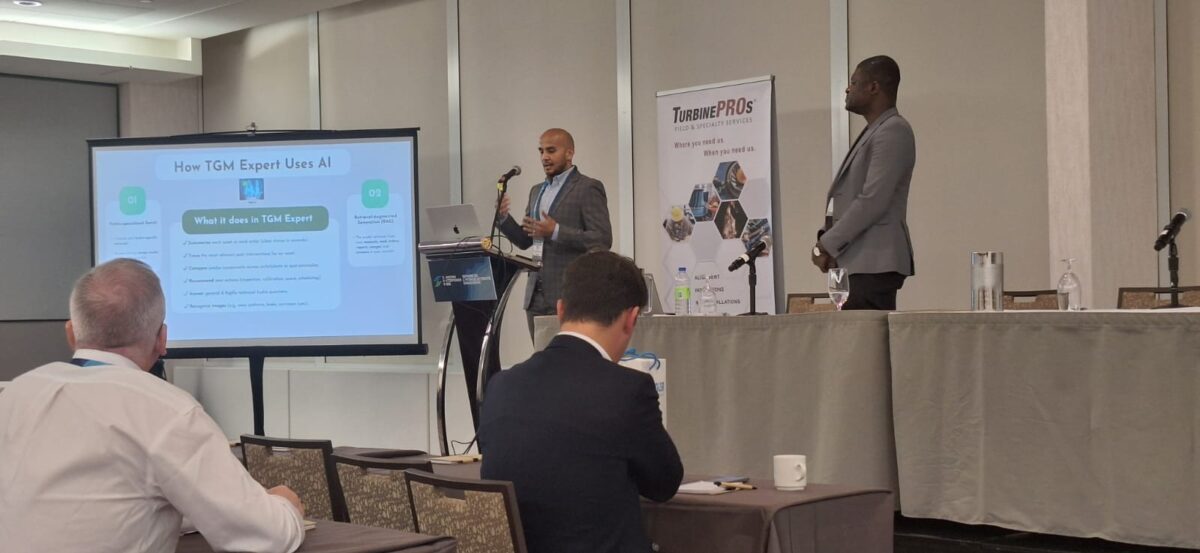
Its expertise has also caught the attention of Hydro-Québec, following a presentation given during Canadian Hydropower Week to a full-capacity audience.

“I think they saw potential,” Emmanuel Ngue noted after a meeting with a representative of the state-owned company.

EN Solutions Hydro’s growing reputation also rests on support from the National Research Council of Canada, which actively backs its work, as well as assistance from Global Affairs Canada, particularly for its international development.

The company has also submitted a joint application with the Computer Research Institute of Montreal (CRIM) as part of a Natural Resources Canada call for projects, aimed at developing the first large Canadian language model (LLM) dedicated to hydroelectric power, hosted and operated in Canada.

All signs suggest that EN Solutions Hydro could become one of Canada’s leaders in artificial intelligence applied to hydroelectric power.

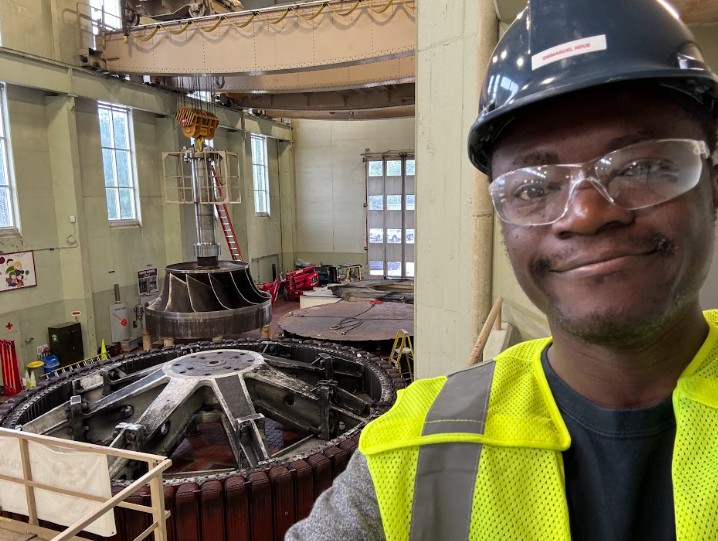
Emmanuel Ngué is confident in his company’s success

en_USEnglish